The Dark Skies Declassified Complete Series is back on DVD! Gets yours on Amazon!
Sound, Light & Frequency is a 36-episode immersive journey into one of the most provocative questions of our time: what if Hollywood hasn’t just imagined UFOs—but has been part of a deeper, decades-long conversation about them? Hosted by veteran journalist and producer Bryce Zabel and writer/producer Brent Friedman, the series is produced under the Stellar Productions banner in partnership with iHeartMedia. Each episode uses a “portal” film or television series—from classics to cult favorites—as a gateway into the real-world history, mythology, and mounting evidence surrounding UFOs and UAPs. From the 1950s to today, Sound, Light & Frequency explores the persistent—and often overlooked—connection between entertainment and the phenomenon itself.
At the heart of the show is the extraordinary backstory of Dark Skies, the cult NBC series created by Zabel and Friedman. During its production, the two were approached by a man claiming to represent Naval Intelligence—a real-life “Man in Black” encounter that still raises questions about how close Hollywood storytellers sometimes get to classified truths. That experience, combined with Bryce’s encounters with high-level insiders and celebrities during his time as a CNN correspondent and former CEO of the Television Academy, and Brent’s collection of deeply personal experiencer stories, forms the series' backbone. The podcast also features perspectives from figures like Reagan insider John S. Herrington, grounding the conversation in both lived experience and professional credibility.
Sound, Light & Frequency is designed as a lifetime experience—blending entertainment, investigation, and personal revelation. Each episode not only examines a film or TV series but places it in a broader UFO historical context, asking what Hollywood knew, when it knew it, and why certain stories keep resurfacing. If you’re intrigued by the possibility that fiction may be closer to reality than we’ve been told, we invite you to explore this site for additional content, images, and research materials—and listen to Sound, Light & Frequency wherever you get your podcasts, including Apple, Spotify, iHeart, Pandora, and more.
And yes, you can also tune in to hear Bryce and Brent pronounce “UFOlogical” in completely different ways.
The answer comes in the very first episode. The story begins at the NBC/Columbia premiere party for Dark Skies, the television series created by Bryce Zabel and Brent V. Friedman. What should have been a routine industry event took an unexpected turn when an unfamiliar guest introduced himself as being from the Office of Naval Intelligence.
He told us he had seen the show. He had.
He told us we got a lot of things right.
Then he did something far stranger.
That moment, and what followed, gave the series its name.
The first episode, Party Crasher, walks through the encounter in detail and explains why sound, light, and frequency became the framework for everything that followed.
Some answers come early.
Others take longer to surface.
Everything about the UFO/UAP reality issue is up for grabs. Never before has so much discussion been taking place in social media, establishment news, science, education, etc. There are plenty of podcasts that discuss all this, and Bryce even hosts one of them, Need to Know.
Sound, Light & Frequency is not like the others. We're looking at the issue through another lens; the POV of Hollywood.
Bryce and Brent have their own story to tell, of course, but our podcast is about more than that. We are telling the larger story, too — the one where Hollywood, UFOs and government appear to be in some kind of Unholy Alliance to... do what exactly? That's our journey of discovery, and we invite you to join us.
In the summer of 1981, eighteen-year-old Brent Friedman and two friends drove two cars across the country, with the dog and the household belongings of a family friend who had recently moved from California to Washington. That friend was John S. Herrington, a successful lawyer, former Marine officer and longtime associate of Ronald Reagan who had joined the new administration at the White House. Within weeks, President Reagan would nominate Herrington to become Assistant Secretary of the Navy for Manpower and Reserve Affairs. Four years later, Herrington would enter Reagan’s Cabinet as Secretary of Energy.
What happened one night at Herrington’s Virginia home has stayed with Brent ever since.
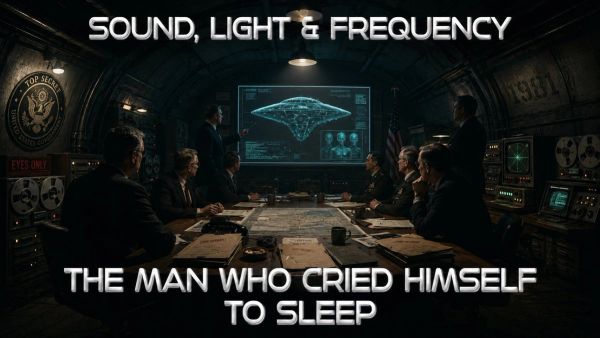
Brent had known Herrington since childhood. Their families were close, their children grew up together, and Herrington had been enough of a presence in Brent’s life to teach him how to throw a baseball and take a personal interest in his future. That night in 1981, after dinner, the two went outside to talk privately. According to Brent, Herrington described having undergone an extended series of highly classified briefings at an underground facility in West Virginia. He told Brent that what he had learned was so disturbing that he had cried himself to sleep at night because this was not the world he thought he was bringing his daughters into.
Then he told him why.
As Brent remembers the conversation, Herrington said extraterrestrial beings were real, that they were already here, and that he had personally seen them. He described an enormous government effort to manage the secret, including both genuine information and deliberate disinformation, and told Brent that even the people inside the system did not fully understand what was happening. Brent was an eighteen-year-old theater student preparing to enter UCLA. He had no background in UFO research, intelligence programs or the exotic details that would later become central to the UAP debate.
There is no document that proves this extraordinary conversation occurred exactly as Brent remembers it, and Herrington has denied the disclosure account. What exists instead is a chain of circumstances that makes the story difficult simply to dismiss. Herrington was not a random Washington functionary. At the time of the alleged conversation, he was already working inside the Reagan White House and was about to assume a senior civilian position in the Department of the Navy. He would subsequently return to the White House at a high level and then spend four years running the Department of Energy, an agency responsible for some of the nation's most sensitive nuclear facilities and classified programs.
There is also Brent himself. He did not suddenly produce the story decades later after becoming immersed in UFO culture. He told members of his family after returning from Washington. More importantly for the history of Dark Skies, he told Bryce Zabel the story in detail when the two first got to know each other in 1994. Bryce has heard Brent tell it repeatedly over more than thirty years and says its essential details have remained consistent.
The timing of that 1994 conversation became consequential. On the very morning Bryce and Brent first sat down together at Ca’ del Sol near Universal Studios, Bryce had independently sent his agent a two-page treatment for a television concept then called Majestic. Its premise involved a Hollywood producer becoming entangled with a secret organization hiding the truth about UFOs and using fiction as a way to let some of that truth escape. When Brent told Bryce the Herrington story later that day, the real world suddenly seemed to intersect with the fictional one Bryce had already begun imagining. The two men continued talking, Brent suggested a new title — Dark Skies — and the Herrington story became one of the real-life experiences informing the series as it developed.
Then came an extraordinary postscript. When Dark Skies reached NBC in 1996, Brent says he received a note on John Herrington stationery congratulating him and telling him, in essence, that he had finally gotten his story out there. Whatever Herrington intended by the message, Brent regarded it as an acknowledgment that his old family friend understood that something from their 1981 conversation had found its way, under the cover of fiction, into Dark Skies.
For decades, Brent was reluctant to tell the full story publicly. Sound, Light & Frequency changed that. In the episode “The Man Who Cried Himself to Sleep,” Brent finally laid out the 1981 encounter in detail, including the parts that make him uncomfortable and the portions he cannot independently prove. Rather than asking listeners simply to believe him, the podcast examines what was known then, what became known later and what can be documented about Herrington’s extraordinary access.
That trail now extends to David Grusch.
Before Grusch became nationally known for his sworn congressional testimony about alleged U.S. crash-retrieval and reverse-engineering programs, he came to Bryce Zabel’s home in 2023 to prepare for the interview that would introduce him to the public. Bryce asked him directly whether he knew the name John Herrington. Grusch’s reaction was immediate: he knew about him. When Bryce pressed for more, Grusch indicated that he could not discuss what he knew.
That moment did not prove Brent’s 1981 story. But it changed the context surrounding it.
The story became still more consequential when people involved in the congressional UAP investigation began trying to persuade Herrington to testify in a secure setting. Grusch himself became involved in that effort, seeking to have Herrington speak inside a SCIF about what he may know concerning alleged crash retrievals. More recently, Grusch has communicated directly with Brent about efforts to bring Herrington before investigators.
That brings an intensely personal story full circle. In 1981, an eighteen-year-old Brent Friedman drove John Herrington’s cars across America to Washington and came away saying that a man entering the highest levels of government had told him an almost unbelievable secret. In the 1990s, that story helped inform the creative partnership that became Dark Skies. More than forty years later, people involved in the modern congressional UAP investigation have independently become interested in the very same man.
We do not present the John Herrington story as settled fact. We present the record: what Brent says happened, when he first told it, who Herrington demonstrably was, what happened afterward, and why serious people investigating the UAP issue now consider Herrington potentially important.
That is why the story matters.
If Brent Friedman has been accurately recounting what he was told on that Virginia veranda in 1981, then one of the most remarkable UFO disclosure stories of the modern era did not begin with a whistleblower hearing, a leaked document or a grainy military video.
It began with a trusted family friend talking privately to an eighteen-year-old kid.
On September 21, 1996, the night NBC premiered Dark Skies, Bryce Zabel and Brent Friedman were hosting a watch party at Bryce’s Los Angeles home for roughly 200 people connected to the series. Network and studio executives, cast, crew, writers, directors and friends filled the house and backyard. Almost everyone wore a special Dark Skies “Majic” identification badge made for the occasion.
One man did not.
He introduced himself only as J.C. and said he worked with people connected to the Office of Naval Intelligence. More startlingly, he said he and his associates had already watched the two-hour Dark Skies pilot—even though it had not yet aired—and had also seen material from episodes still being prepared. When Bryce challenged him with a specific question about what happened after the crop-circle sequence, J.C. correctly described a scene from the unaired pilot. Whatever else he was, he appeared to know the show.
J.C. said the people he represented thought Bryce and Brent had “gotten a lot right.” He offered them an extraordinary arrangement: they could be provided with inside information about the UFO phenomenon and, in return, incorporate selected pieces of that information into Dark Skies. The irony was difficult to miss. Bryce and Brent had sold their television series using a fictional document—the Loengard Letter—which proposed that the truth about UFOs could only be told safely under the cover of fiction. Now a stranger claiming intelligence connections had walked into their real lives and appeared to be proposing essentially the same thing.
Bryce, who was trying to host a major network premiere party and was suspicious of the entire approach, finally told J.C. that he needed to leave. J.C. agreed. But before going, he asked for a pen and a piece of paper.
Brent’s wife, Patricia, produced a bank deposit envelope from her purse and tore off part of it. Holding the scrap in his hand, J.C. spent roughly thirty seconds drawing an arrangement of lines, arrows and symbols. He folded it, handed it to Brent and told him to keep it somewhere safe for ten or fifteen years. According to Brent’s recollection, J.C. said that even if they never ended up working together, someday the drawing would help establish that he had been serious.
Brent unfolded the paper. Neither he nor Bryce understood what they were looking at.
“What is this?” they asked.
J.C.’s answer eventually supplied the title of this podcast:
“Secrets of the Universe. Sound, light and frequency.”
The drawing became known simply as the Formula.
For a time, Bryce and Brent tried to understand it. Then television production took over their lives. Four days after the premiere party, J.C. returned with an older man identified only as “the Major” for an extended meeting at the Dark Skies production offices. The larger question—who these men were, what they wanted and whether the proposed relationship represented disclosure, disinformation or something else entirely—became more urgent than deciphering a small piece of paper covered with mysterious symbols.
The Formula nevertheless survived.
For years Brent kept possession of it. The phrase “sound, light and frequency” never really left either man, even as the original piece of paper eventually became misplaced among decades of scripts, files and production material. The story was told occasionally, including publicly, but without the original document Bryce and Brent could do little more than describe it from memory. Several people, however, had known about or seen the drawing close to the time it was made, giving the story a history that long predated the creation of the Sound, Light & Frequency podcast.
In 2023, Bryce became determined to find it.
After repeated searches failed, Brent’s daughter Flannery took on the job, going systematically through the files in her father’s office. Within two days, she found the original scrap of the bank envelope, slightly stuck to another piece of paper inside an old file. Bryce and Brent immediately recognized it. After more than a quarter-century, the Formula was back.
What followed was several years of private investigation. The image was shown to people with backgrounds in physics, intelligence, consciousness studies, religious symbolism and the UAP field. Jacques Vallée was among those Bryce discussed it with. Interpretations varied widely. Some saw elements suggestive of sacred geometry. Others saw relationships to Eastern concepts involving energy centers, consciousness or Kundalini. Symbols that appeared straightforward to one person carried entirely different meanings to another. The more people examined it, the clearer one thing became: whatever J.C. intended, this was not an equation that could simply be handed to a physicist and “solved.”
That distinction is important. Bryce and Brent do not claim that the Formula has been scientifically validated as the “Secrets of the Universe.” They know what happened to them that night. They possess the original object J.C. drew. They have witnesses and a chain of memory surrounding it. What the drawing actually means—and what J.C. intended it to mean—is a different question. Their own research concluded that it could not responsibly be answered behind closed doors.
So, in September 2026, nearly thirty years after it was created, Sound, Light & Frequency finally released the original Formula publicly.
The decision was deliberate. Rather than announce that they had solved it, Bryce and Brent did the opposite. They asked their audience—scientists, historians, occult researchers, mathematicians, intelligence veterans, skeptics, believers and simply curious people—to examine the same evidence they had been studying and tell them what they saw.
The response began almost immediately.
One of the earliest and most consequential discoveries came from outside the SLF investigation. Internet researchers identified a striking resemblance between the central structure of the Formula and imagery associated with Israel Regardie's The Middle Pillar, an influential work connecting Western esoteric practice, psychology and the Kabbalistic concept of a central path or “middle pillar.” Regardie's book was first published by Aries Press in 1938, almost six decades before J.C. walked into the Dark Skies party.
That discovery materially changed the investigation.
Until then, Bryce and Brent had been examining the Formula largely as something J.C. might have devised or transmitted himself. The Middle Pillar made clear that at least part of its visual language had a much older precedent. That does not establish that J.C. copied Regardie, nor does it establish anything paranormal about the drawing. It does eliminate one possible assumption: that every element of the Formula originated with the man who drew it in 1996.
For some critics, that was enough to declare the mystery solved. Bryce and Brent reached a different, more limited conclusion.
If J.C. deliberately adapted an existing esoteric image, why did he choose that image? Why attach it to the words “sound, light and frequency”? Why tell two Hollywood writers to put it away for fifteen years? Why combine or modify older symbols in the particular way he did? And why give it to them as his final act after offering a relationship with people he claimed were connected to Naval Intelligence?
Those are questions, not answers.
There is also an intriguing thematic connection. The Middle Pillar deals explicitly with consciousness, spiritual development, vibration and the movement or circulation of energy through the human system. Later editions and commentary connect its practices to Eastern concepts including chakras. Those themes overlap in surprising ways with interpretations Bryce and Brent had already received before the book connection was publicly identified. They also echo Brent’s own much later interest in whether the Formula can be read as a representation of a Kundalini-type process—an interpretation, not an established fact.
And that is where the Formula stands today.
We know the physical object exists.
We know Bryce, Brent and others remember J.C. creating it at the Dark Skies premiere party.
We know J.C. described it as “Sound, Light and Frequency” and the “Secrets of the Universe.”
We know the drawing contains imagery that can be connected to traditions and sources much older than 1996.
We do not know whether J.C. was really associated with the Office of Naval Intelligence.
We do not know whether the Formula contains hidden scientific information, spiritual instruction, an intelligence-community calling card, a deliberately constructed puzzle—or simply a dramatic attempt by one mysterious man to establish credibility with two Hollywood writers.
And we do not believe those uncertainties are weaknesses in the story. They are the investigation.
For almost thirty years, the Formula belonged to Bryce and Brent. Now it belongs to everyone who wants to examine it.
That was the point of revealing it.
Look at the original. Check the sources. Challenge the interpretations. Find the precedents we missed. Tell us when we're wrong. And, if there is something here that none of us yet understands, help us figure out what it is.
The Formula began as J.C.'s attempt to prove that he was “on the level.”
Three decades later, the question remains open.
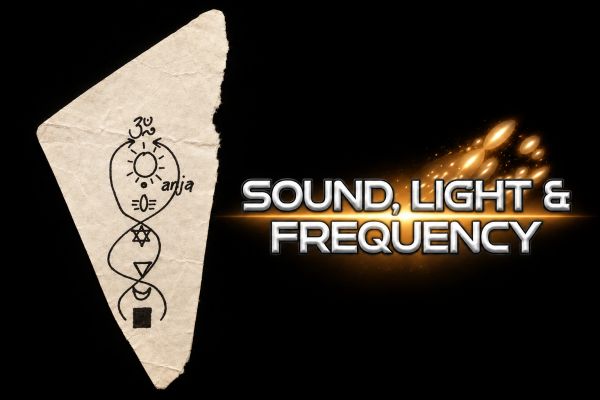
At the Dark Skies premiere party, an uninvited guest told Bryce Zabel and Brent Friedman that he was from the Office of Naval Intelligence. He drew this "formula" on the back of a bank deposit envelope and told them it represented the "Secrets of the Universe... Sound, Light and Frequency." You can download a clean copy of the Formula plus our expert analysis on our dedicated page.

He told a family friend that after he'd come to Washington, D.C. to serve in the Reagan Administration, he'd been extensively briefed about UAP reality at an underground facility in West Virginia. He said he'd cried himself to sleep every night because he had two daughters and he didn't want them to grow in the world he was learning about.

Bryce is a prolific writer/producer in TV and film, an author and, recently, the co-host of popular and critically acclaimed Need to Know. His latest feature film, a true WWII story based on a New York Times bestseller, The Last Battle, is scheduled to shoot in Europe in 2026 with Harald Zwart directing a script written by Bryce. Besides the Emmy-winning Dark Skies, Bryce has created four other primetime TV dramas including Fox’s M.A.N.T.I.S. and The Crow: Stairway to Heaven. His film, Official Denial, was the first original movie produced by Syfy. As a writer/producer, he worked on the development teams for the Spielberg series, Taken, and ABC’s Lois and Clark: The New Adventures of Superman.
Bryce has previously been the elected CEO of the Television Academy (the first writer to hold the position since Rod Serling), an on-air CNN correspondent, an award-winning investigative reporter for PBS, and a USC professor teaching graduate level screenwriting. He has authored three books, including A.D. After Disclosure, a classic in UFO non-fiction. He’s a two-time winner of the Sidewise Award for Alternate History as well as the WGA award for Outstanding Limited Series. He’s been an Emmy nominee in the Host/Moderator category, and appears as a subject matter expert on national TV newscasts.

As a creator, writer and producer, Brent has more than 30 years of experience in entertainment across all platforms. In traditional media, Brent has worked with nearly all the major U.S. studios and networks with a passionate focus on science fiction and fantasy, including projects such as Star Trek: Enterprise, The Twilight Zone, Star Wars Rebels, and the Emmy-winning series Star Wars: The Clone Wars, and the NBC alien invasion series, Dark Skies, which he co-created with Bryce.
In the early 2000’s, Brent was a transmedia pioneer with his digital media company, Electric Farm Entertainment, and has since become an expert in world-building for multiple franchises including League of Legends, Walking Dead, and most recently, Batman. In games, Brent has worked as a narrative designer and writer for some of the top companies in the business such as Electronic Arts, Zynga, Telltale, 343 Industries, Capcom and Activision.
He has compiled credits on such games as Command & Conquer 3: Tiberium Wars, Empires & Allies, Halo 4, Tales from the Borderlands, Resident Evil 2
Remake, Call of Duty Black Ops: Cold War, Call of Duty Vanguard, Modern Warfare 3.

Both Brent and Bryce appeared w/ Jesse at his Austin, TX studio. Bryce and Jesse had just watched "Disclosure Day" together at the iMax the night before!
Bryce appeared on this show with Christopher Mellon. Dr. Phil had just received early documents from tranche #4 with a note from President Trump that said, "Have some fun with this!"
Bryce appeared w/ AJ at his Las Vegas, NV studio. This one covered some personal topics that have never made it on "Sound, Light & Frequency."
We're thrilled to announce that Dark Skies: The Declassified Complete Series is back in production by Shout! Factory.
The Declassified Complete Series includes six discs and the original pilot we shot before extensive reshoots. Enjoy and watch the skies!

We use cookies to analyze website traffic and optimize your website experience. By accepting our use of cookies, your data will be aggregated with all other user data.